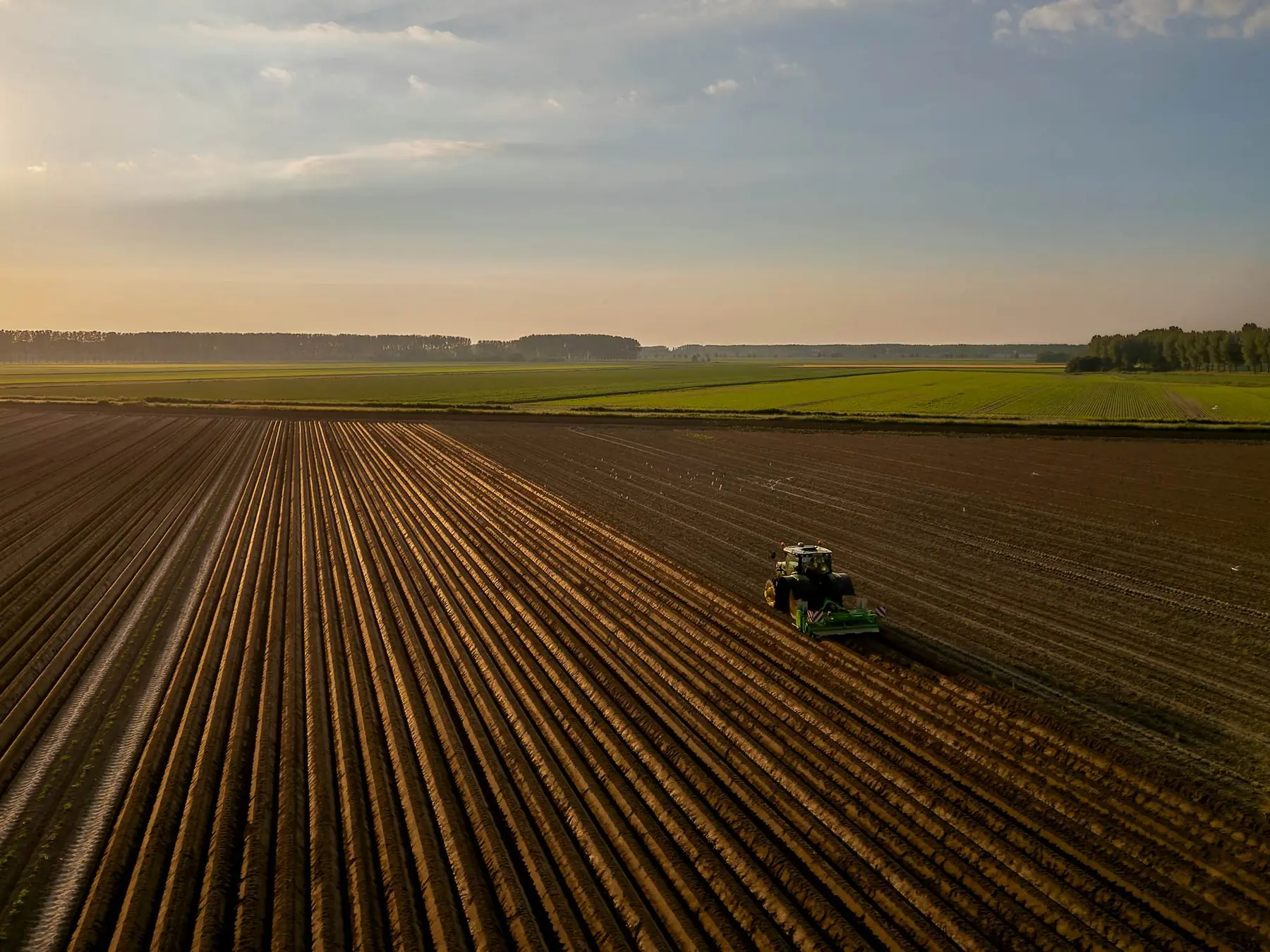
Bioinputs for Food Security and Economic Resilience

More productive farms. Healthier soils. Stronger agricultural economies.

Bioinputs are helping reshape agriculture by harnessing biological processes to improve or maintain productivity while reducing dependence on costly chemical inputs and their associated economic and environmental risks.

Driven by scientific breakthroughs, expanding markets and new policy frameworks, biological solutions are reaching more farmers and creating new opportunities for agricultural innovation, local businesses and rural development.

Download the fact sheet
A Micro Green Revolution, a green revolution,
but with microorganisms.
Dr. Mariangela Hungria2025 World Food Prize winner, recognized for her scientific achievements in biological nitrogen fixation.

What Are Bioinputs

How they contribute to agricultural production

Bioinputs are products and solutions made from living organisms, biological processes or natural materials that support agricultural production. They help crops access nutrients, stimulate plant growth, manage pests and diseases, and improve soil health.

Depending on the crop and farming system, bioinputs can replace, complement or improve the efficiency of conventional agricultural inputs.

Definitions of bioinputs vary across countries. This knowledge hub adopts a broad description that includes biological products and related solutions supporting agricultural production.

2 Crop protection 3 Biostimulants 1 Biofertilizers 4 Soil improvement

Different types of bioinputs

Select a type to explore

Plant Growth Promoting Bioinputs

Examples

The Case for Bioinputs

Toward a new generation of agriculture

The challenge of global food security

We need to move away from this linear system that relies on chemical inputs, where every link is exposed to shocks……to a circular system that works with biology, making better use of nutrients, microbiology and local resources.

We need to move away from this linear system that relies on chemical inputs, where every link is exposed to shocks…

Energy dependence Price volatility Geopolitical tensions Supply concentration Reduced profit margins Rising food prices Declining soil fertility Fossil fuel-basedinputs Synthetic fertilizers& pesticides Supplyconcentration On-farm economics& fiscal impact Soil degradation& pest resistance

Hover over each step to learn more.

…to a circular system that works with biology, making better use of nutrients, microbiology and local resources.

Productive & resilient Living soils & microbiology Efficient nutrient use Healthy roots & plants Recycled nutrients

Hover over each step to learn more.

This is not simply about replacing one product with another,
but transforming how we produce food

through a more holistic approach to agriculture that recognizes its complexity
and works with nature rather than against it.

The economic case

Beyond the farm

Bioinputs vs. conventional

4.5×

Estimated annual growth in the bioinputs market value (CAGR) of 13.5%, approximately 4.5 times the 3% growth rate projected for the conventional crop protection market.

Accenture

Global sales

US$17bn

Estimated global agricultural biological sales in 2025.

CropLife, 2023

Market size

US$29bn

Projected global market size by 2029.

Technavio / SP Ventures

Growth forecast

15.4%

Projected compound annual market growth.

Technavio, 2025–2029 forecast

Major agricultural companies such as Corteva, Bioceres and Pivot Bio are already investing in the sector,
with acquisitions worth hundreds of millions of dollars.

Building local industries and markets

Bioinputs are also opening opportunities for

  • Local manufacturing
  • Rural enterprises
  • Agricultural services
  • Strengthening domestic productive capacity
  • Reducing dependence on concentrated supply chains

What They Deliver

A system-wide opportunity

The benefits of this growing market extend across the agricultural economy, creating opportunities for farmers, businesses and society as a whole.

Food systems & ecosystems Economies & markets Rural communities Farmers

Select a ring to explore

For farmers

More profitable and resilient farming

    Scaling Up

    What will it take to accelerate adoption?

    Scaling bioinput adoption requires reliable, affordable products for farmers, viable markets for businesses, and investor confidence to finance growth.

    The bioinputs ecosystem: from innovation to impact

    Researchers &knowledge institutions Governments& regulators Investors &financial institutions Businesses, industry& infrastructure Farmers &producer organizations Civil society &international orgs

      These actors must work together to build trust, strengthen markets,
      and enable farmers to confidently adopt bioinputs.

      Turning public support into bioinput innovation

      Governments have a powerful opportunity to accelerate agricultural innovation by redirecting harmful subsidies toward alternatives, such as bioinputs.

      US$470bn

      Opportunity to repurpose agricultural support

      Source: FAO, UNDP and UNEP

      A 2021 joint report from FAO, UNDP and UNEP found that 87% of the US$540 billion provided annually by governments to support agricultural producers included measures that were price-distorting, harmful to nature and health, inefficient and inequitable.

      There is a huge opportunity to redirect existing public support away from subsidies and incentives that continue to embed the risks of the current system, toward measures that help scale bioinputs. This can include strengthening public investment in research, local infrastructure development and rewarding farmers for delivering public goods, such as improved ecosystem services. This could help bioinputs reach more farmers, improve agricultural productivity and resilience, and create new market and rural employment opportunities.

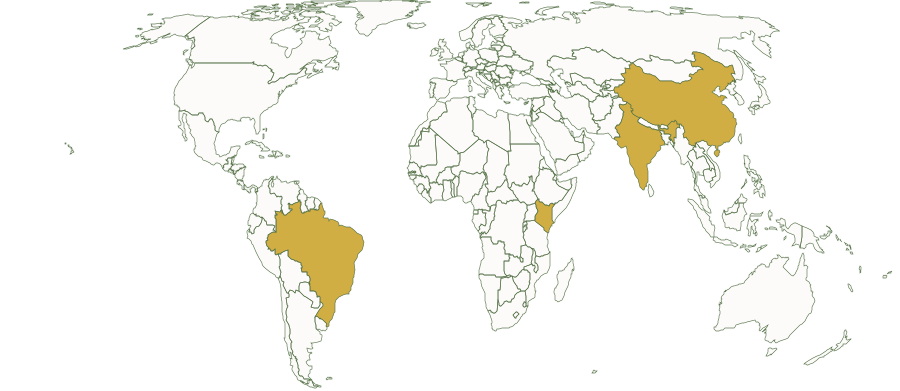
      Countries leading the way

      Several countries are introducing policies and incentives to support bioinputs,
      offering different approaches to innovation, market development and farmer adoption.

      Brazil · Key policyBioinputs Law (15.070/2024)
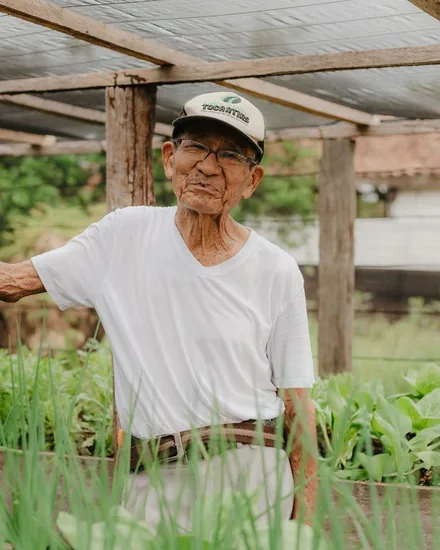
      Farmer in his plant nursery, Tomé-Açu, Pará, Brazil
      Brazil

      of cultivated areas used bioinputs in 2024

      1 / 4

      Brazil's Bioinputs Law (15.070/2024) establishes a dedicated framework to support the development, production and adoption of biological solutions.

      • Regulation: Clearer rules and simplified registration pathways for eligible products.
      • Innovation: Support for research, biotechnology and locally adapted solutions.
      • Finance and markets: Provisions for fiscal incentives, financing mechanisms and preferential rural credit.
      • Farmer adoption: Recognition of on-farm and cooperative production, alongside training and technical assistance.

      Results

      In 2024, Brazil had 36% of areas cultivated with some type of biological input. Today, around 85% of its soybean area uses nitrogen-fixing bacteria, significantly reducing reliance on synthetic nitrogen fertilizers and generating an estimated US$29 billion in savings for farmers (estimate based on the methodology proposed by Telles et al., 2023).

      Brazil
      India · Key policyNational Mission on Natural Farming

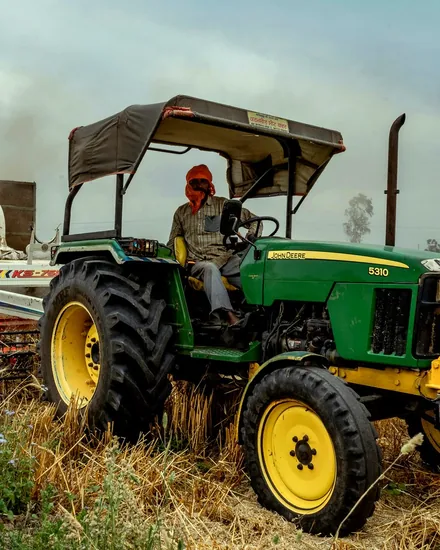
      Farmer on a tractor in a wheat field, Punjab, India
      India

      by March 2026

      2 / 4

      India's regulatory framework recognizes biofertilizers and biostimulants, while its National Mission on Natural Farming supports wider access and adoption.

      • Local supply: 10,000 planned Bio-input Resource Centres.
      • Farmer support: Training, technical assistance and financial incentives for adoption.
      • Scaling: Aiming to expand natural farming across 750,000 hectares and 15,000 clusters.
      • Market development: Certification, branding and market linkages for naturally farmed products.

      Results

      By March 2026, the program had enrolled 1.8 million farmers across 880,000 hectares.

      India

      China · Key policyAgricultural Pollution Control Action Plan (2021–2025)

      Rice terraces in Yunnan, China
      China

      registered and applied by 2025

      3 / 4

      China's Agricultural Pollution Control Action Plan (2021–2025) supported more efficient input use and greener agricultural technologies.

      • Innovation: Research and development of microbial fertilizers and green agricultural inputs.
      • Nutrient efficiency: A target of at least 90% coverage for soil-testing-based fertilization by 2025.
      • Biological crop protection: Promotion of integrated pest management and biological alternatives.
      • Scaling: A target of 55% green pest-control coverage of major crops by 2025.

      Results

      More than 11,000 biofertilizer products were registered by 2025, with reported application across over 20 million hectares. Its biopesticide sector has also expanded, doubling its number of registered active ingredients and products over approximately a decade.

      China

      Kenya · Key policyNational Agroecology Strategy (2024–2033)

      Farmland near Limuru, Kenya
      Kenya

      Real IPM annual turnover

      4 / 4

      Kenya's National Agroecology Strategy (2024–2033) promotes sustainable farming and agricultural value chains, complemented by programs such as BOOST.

      • Local access: Agroecology service hubs offering biological inputs and soil testing.
      • Farmer support: Training and technical assistance.
      • Entrepreneurship: Opportunities for local businesses and youth employment.
      • Market development: Stronger production, distribution and agricultural service networks.

      Results

      Real IPM, one of the leading African biological crop protection companies, demonstrates how research and product development, combined with local manufacturing and farmer support, can create commercial opportunities and jobs. Its presence has expanded across East and Southern Africa, with annual turnover growing from US$850,000 in 2007 to US$5.5 million in 2019.

      Kenya

      Rethinking Fertilizers

      From dependency to resilience

      Fertilizers have played a critical role in feeding the world. Yet increasing dependence on fossil-based production, concentrated global supply chains and geopolitical disruptions have exposed farmers to repeated price shocks, contributed to the cost-of-living crisis for consumers, and heightened food security concerns for governments. Synthetic fertilizers are also a significant source of nitrous oxide (N₂O) emissions, a greenhouse gas with nearly 300 times the global warming potential of carbon dioxide.

      The challenge is no longer simply securing more fertilizer, but building more resilient nutrient systems.

      Featured in the Financial Times · Global Fertilizer Day 2026 By Gonzalo Muñoz Ambition Loop Co-Founder and UN Climate Change High-Level Champion from the COP25 Presidency Read the article Coming soon

      Why fertilizer dependency is a growing economic risk

      Nitrogen fertilizer production relies heavily on natural gas, making its costs and availability vulnerable to energy markets and geopolitical instability. Recent crises, from the war in Ukraine to disruptions in the Middle East, have exposed the risks embedded in concentrated global fertilizer supply chains.

      The consequences extend far beyond agriculture.

      Cascading impacts of energy and fertilizer supply chains

      Geopolitical conflict disrupts the supply and price of energy, and fertilizer prices increase
      Increased trade imbalances, pressure on government finances
      Higher input costs for farmers, reduced profit margins
      Lower agricultural productivity
      Higher food prices and inflation
      Greater poverty and inequality, food insecurity

      Hover over the highlighted boxes to see an example.

      Building more resilient nutrient systems

      1. Foundation

        Healthy soils and their microorganisms play an essential role in providing crops with the nutrients they need to grow.

        Soil microorganisms help cycle nutrients and make them accessible to plants, improving the efficiency of fertilizer use.

      2. Approach

        Building on these natural processes requires more than replacing synthetic fertilizers with biological products.

        It calls for a more holistic approach to nutrient management, combining better agronomic practices with locally adapted mineral, organic and biological solutions.

      3. Goal

        The common goal is to strengthen productivity while reducing costs, nutrient losses, vulnerability to external shocks and greenhouse gas emissions, namely nitrous oxide (N₂O).

        Priorities vary across agricultural systems: some need greater access to essential nutrients, while others need to reduce excessive or inefficient fertilizer use.

      From input dependency to nutrient efficiency

      Excessive fertilizer use Biological approach

      Drag to compare

      Input-dependent system

      1. Depleted soils and weakened soil biology
      2. Poor nutrient retention, cycling and uptake
      3. Higher costs, pollution and emissions of nitrous oxide (N₂O) and other greenhouse gases

      Resilient nutrient system

      1. Healthy soils and active microbial communities
      2. Biological, organic and mineral solutions working together
      3. Better nutrient availability, retention and uptake
      4. More efficient nutrient use and reduced avoidable losses
      5. Lower costs, reduced emissions and stronger resilience

      Healthy soils and functioning microbial communities are fundamental to nutrient efficiency.

      1. Soil health + better agronomy + balanced mineral, organic and biological nutrients
      2. improved nutrient efficiency
      3. lower avoidable input costs and losses
      4. more resilient agricultural systems

      Conceptual comparison, not a universal causal pathway: outcomes depend on soil conditions, crop requirements and management practices.

      Biological solutions in practice

      Select a solution to explore

      The shift is already taking shape

      This transition in fertilizer systems is gaining momentum, supported by growing investment in biological solutions.

      China

      1,180

      In China, 1,180 microbial fertilizer products were registered in 2023 alone.

      Source: CIRS ↗

      Argentina

      +68.9%

      Argentina is expanding the adoption and commercialization of microbial agricultural inputs, and the value of the country's biofertilizer market grew by 68.9% between 2023 and 2024.

      Source: Locher et al. ↗

      Brazil

      85%

      Microbial inoculation is used on approximately 85% of Brazil's soybean area, demonstrating the large-scale adoption of biological nitrogen fixation.

      Source: Embrapa ↗

      Global initiatives

      Global initiatives also reflect growing international commitment to advance biological solutions such as biofertilizers.

        About this work

        This knowledge hub is developed and maintained by Ambition Loop, a global NGO, headquartered in Chile, on a mission to deliver and inspire transformative action across climate and nature priorities.

        The platform builds on discussions and contributions from a wide group of stakeholders, including exchanges held across 2026 during London, São Paulo and New York Climate Weeks. Stemming from the Campaign to Elevate Nitrous Oxide and the Global South Bioinputs Coalition, it is intended as an evolving, collaborative resource, rather than an exhaustive database or a representation of a formal coalition.

        The Campaign to Elevate Nitrous Oxide in the Climate Agenda is supported in part by ClimateWorks Foundation. Our work on Global South Bioinputs Coalition is supported by Open Society Foundations. This has helped connect existing initiatives and encourage collaboration across the growing bioinputs ecosystem. We are also deeply grateful to this wider community for their contribution to the growing knowledge base that underpins this knowledge hub.

        Stay connected and join the conversation

        Download the fact sheet PDF

        Newsletter & events

        Receive updates and invitations to events on bioinputs.

        Questions, comments or ideas?

        Send us a message.

        Or write to us directly at food@ambitionloop.earth

        Privacy Policy & Data Collection

        The details you share through these forms (name, organization, email and message) are used only to send you updates about this initiative or to reply to your message. We never sell your data or share it for any other purpose. You can unsubscribe or ask us to delete your data at any time. For questions, contact food@ambitionloop.earth.